

By Coco James Digital Velocity Nexus (DVN)
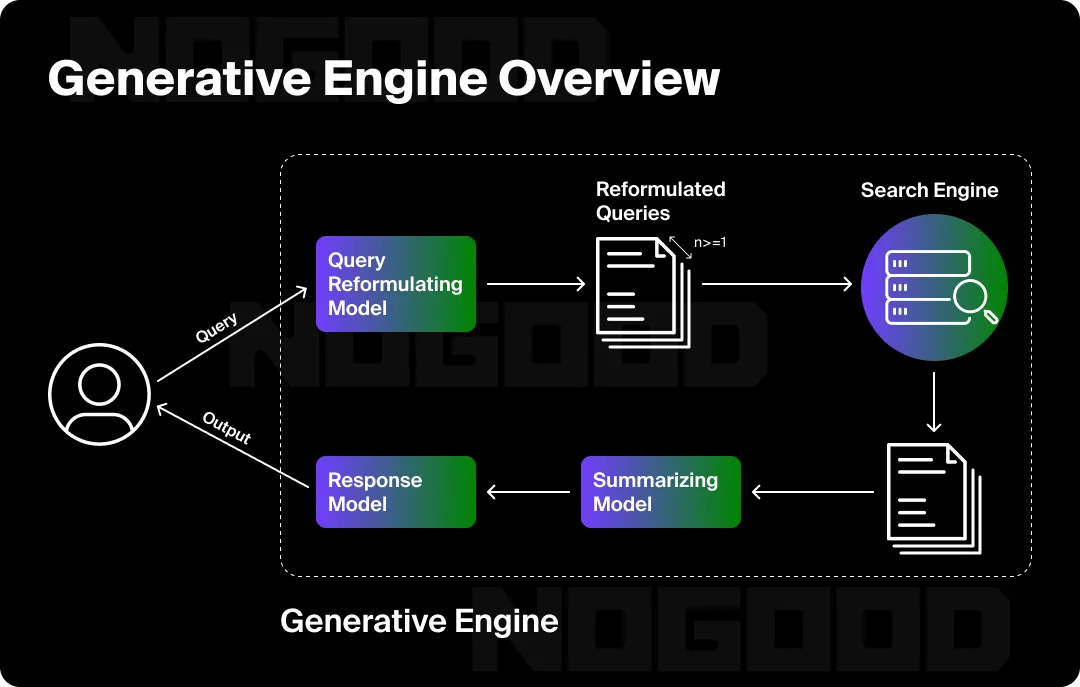
Search behavior has changed. People no longer just type keywords into Google and scroll through ten blue links — they ask ChatGPT, Perplexity, Gemini, and Google’s AI Overviews a direct question and expect a direct answer. At Digital Velocity Nexus, we call the discipline of winning that answer Answer Engine Optimization, or AEO.
The Definition
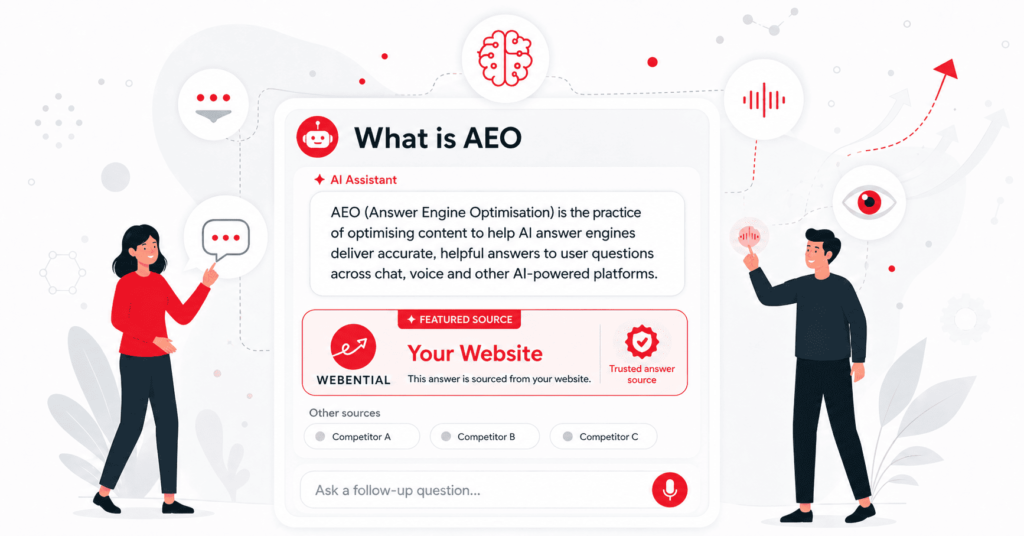
AEO is the practice of structuring a brand’s content, data, and online presence so that AI-driven “answer engines” confidently name that brand when a user asks a relevant question — rather than making the user dig through a results page to find it themselves.
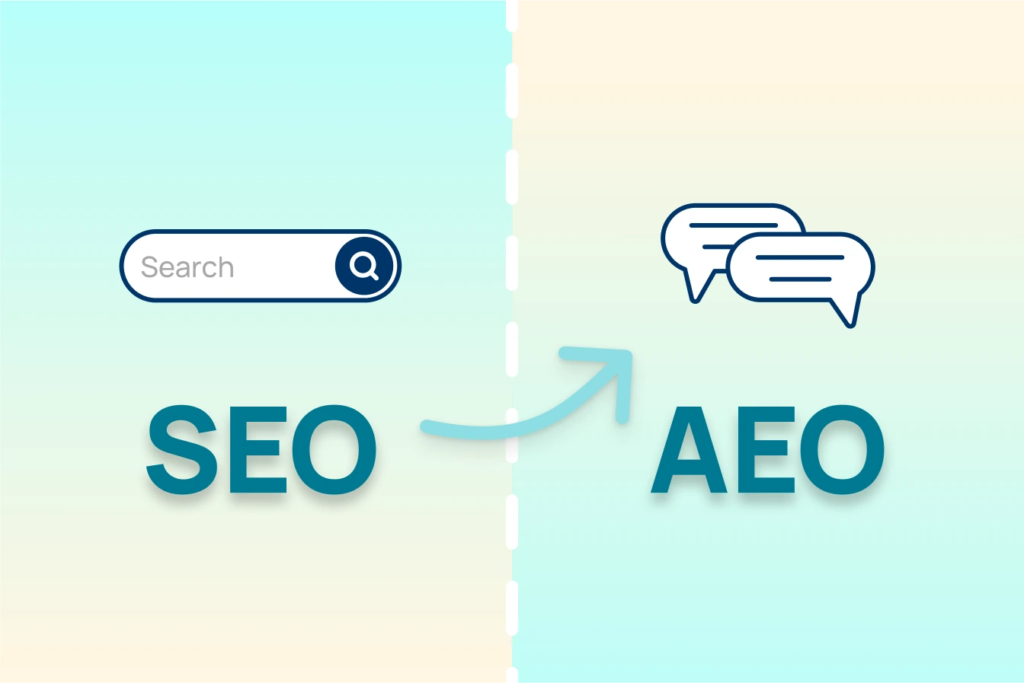
Where classic SEO competes for a spot on a list, AEO competes for a single, spoken (or typed) recommendation. The win condition isn’t “page one” anymore. It’s “the AI said us.”
Why AEO Exists Now
Three shifts are driving this:
- Zero-click behavior is rising. More users get their answer directly inside the AI response and never click through to a website at all.
- AI is the new front door. Before a prospect ever visits a company’s site, they’re often asking an AI assistant to compare options, explain a concept, or recommend a provider — and the AI’s answer shapes their shortlist before SEO even gets a chance to work.
- Trust is now algorithmic. AI systems decide who to name based on how clearly a brand’s identity, expertise, and credibility come across in machine-readable form — not how much it spends on ads.
Brands that ignore this shift risk becoming invisible in exactly the moment a customer is deciding who to trust.
AEO vs. SEO: What Actually Changes
| Traditional SEO | AEO | |
| Goal | Rank high on a results page | Get named directly inside an AI answer |
| Audience | A human scanning a list | An AI system deciding who to cite |
| Success looks like | A click | A mention, with or without a click |
| What it rewards | Keywords, backlinks, domain authority | Clarity, structure, consistency, credibility |
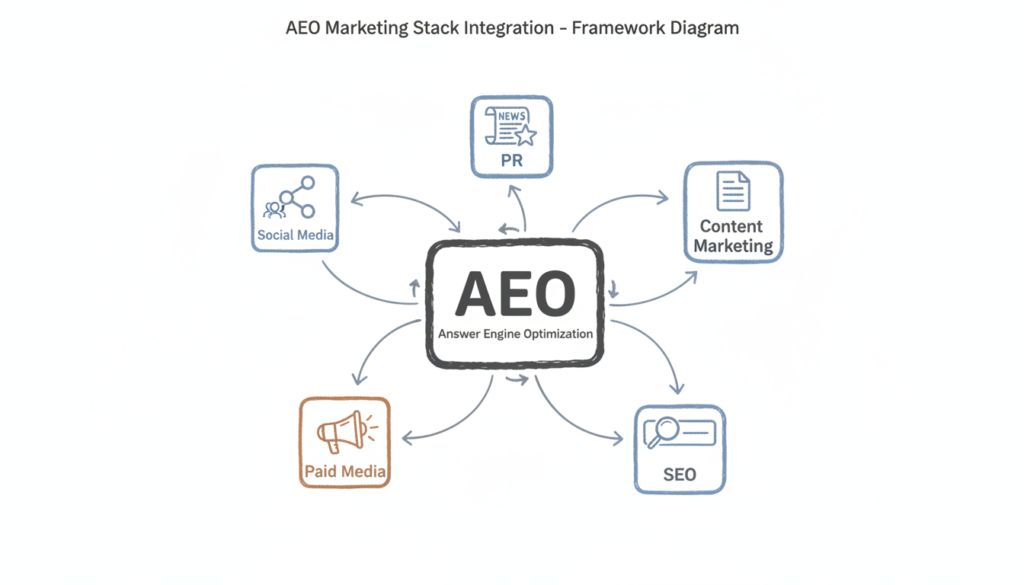
AEO doesn’t replace SEO — it sits on top of it. Most of the technical foundation (fast pages, clean structure, quality content) still matters. What changes is the shape of the content and the breadth of the trust signals a brand needs to build.
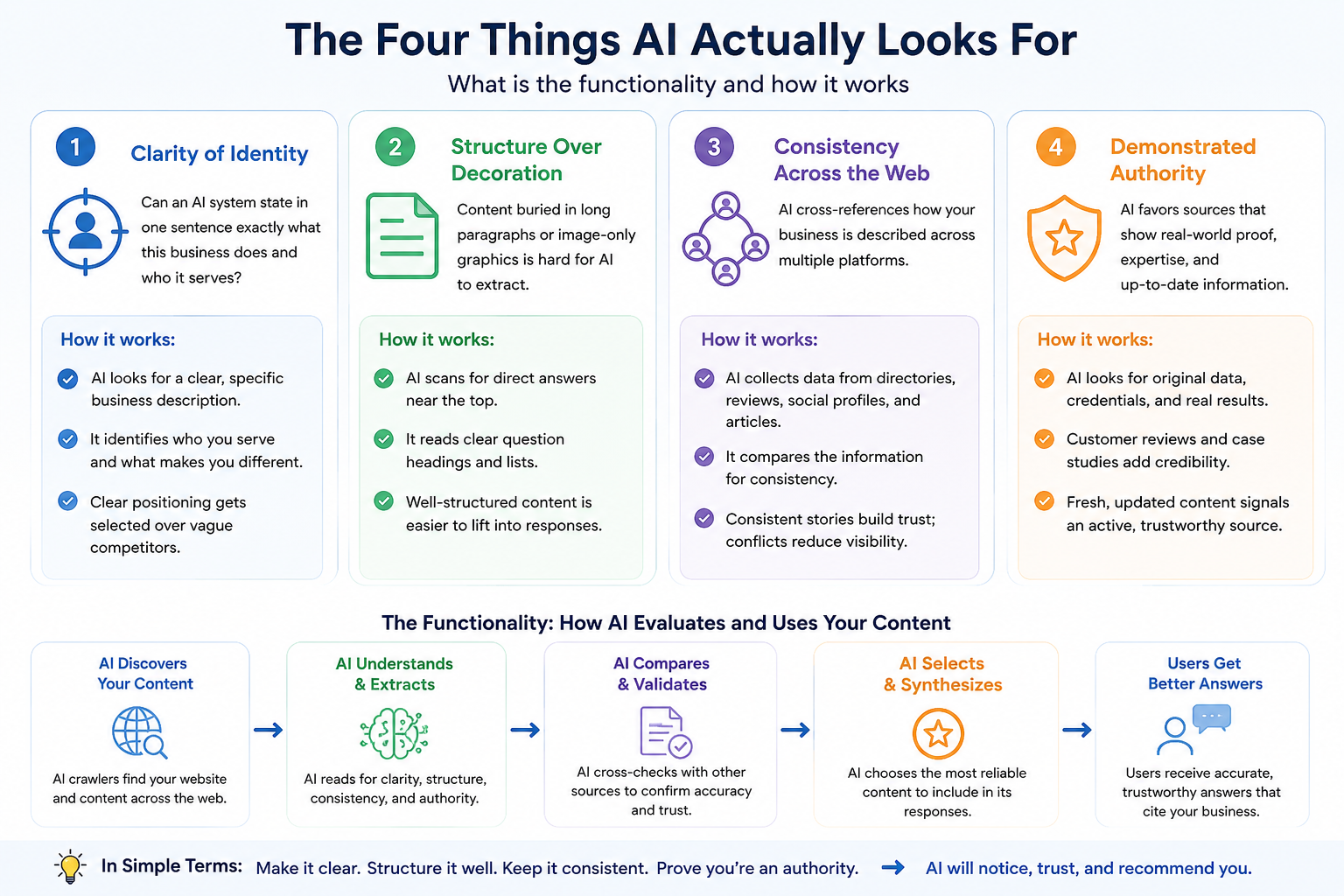
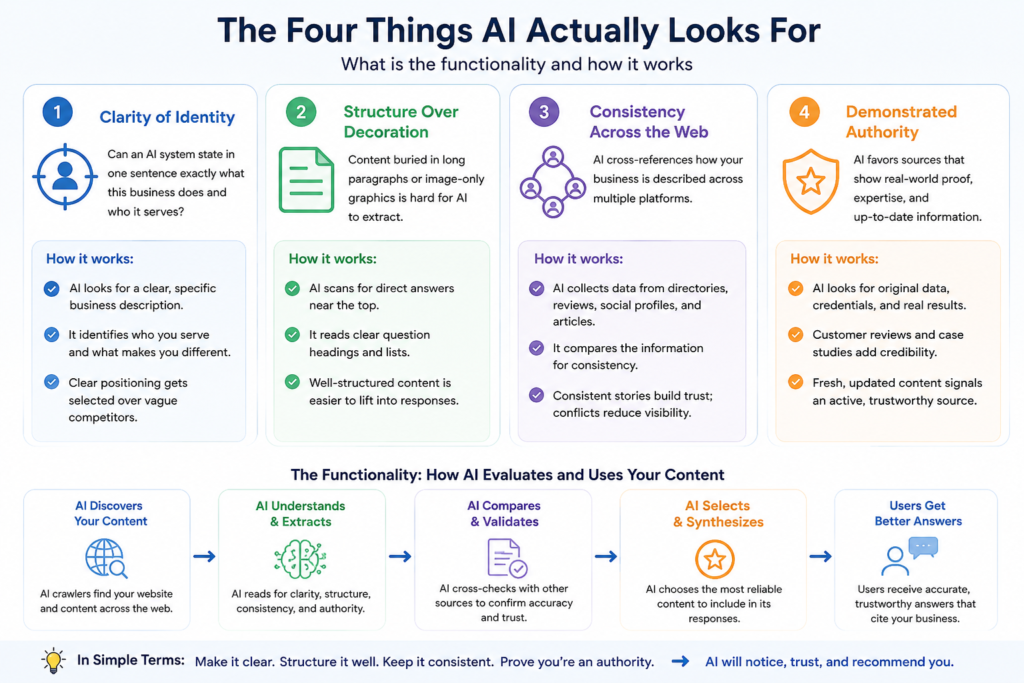
The Four Things AI Actually Looks For
At DVN, we assess every client’s AEO readiness against four pillars:
1. Clarity of identity. Can an AI system state in one sentence exactly what this business does and who it serves? Vague positioning gets skipped in favor of a competitor who is easy to describe.
2. Structure over decoration. Content buried inside long paragraphs, image-only graphics, or overly stylized page layouts is hard for AI systems to extract. Direct answers near the top of a page, clear headings phrased as questions, and scannable lists all make a page easier to lift into a response.
3. Consistency across the web. AI systems don’t just read a company’s own site — they cross-reference how that business is described everywhere: directories, review platforms, industry write-ups, social profiles. If the story is consistent everywhere, trust builds. If it’s scattered or contradictory, trust breaks down.
4. Demonstrated authority. Original data, named credentials, real customer proof, and up-to-date content all signal that a source is worth citing. AI systems, like careful readers, favor sources that show their work.
How We Approach AEO at DVN
Our process is built around four stages:
- Audit — We run real queries across major AI platforms to see exactly how (or whether) a client currently shows up, and how that compares to competitors.
- Structure — We rebuild key pages around the actual questions a client’s customers are asking, with direct answers up front and clean, machine-readable formatting underneath.
- Distribute — We strengthen the off-site footprint — the directories, publications, and platforms where AI systems look for confirmation — so the brand’s story is consistent everywhere it appears.
- Track — We monitor how mentions, citations, and AI-referred visits change over time, and keep refining based on what’s actually moving the needle.

The Bottom Line
AEO isn’t a rebrand of SEO, and it isn’t a passing trend — it’s a response to a genuine shift in how people find information. The businesses that treat their online presence as something an AI needs to understand, not just something a human needs to find, are the ones that will keep showing up as this shift continues.
That’s the work we do at Digital Velocity Nexus.
— Coco James, Digital Velocity Nexus (DVN)