
Understanding Google Ads | A Complete Overview
Author: Coco James

Google Ads has become one of the most widely used advertising platforms in the world, giving businesses of every size the ability to reach potential customers at the exact moment they are searching for a product or service. Whether the goal is to drive website traffic, generate leads, boost online sales, or simply build brand awareness, Google Ads offers a flexible system that can be tailored to almost any marketing objective. This article brings together everything worth knowing about the platform — how it works, why businesses rely on it, the different ad formats available, and the auction system that determines which ads actually get shown.
What Is Google Ads?
At its core, Google Ads is a pay-per-click advertising platform that allows businesses to display ads across Google Search, YouTube, partner websites, and millions of apps within the Google Display Network. Advertisers only pay when someone actually interacts with their ad, most commonly through a click, which makes it a performance-driven form of marketing rather than a flat-fee placement. Because ads can appear right at the top of search results, businesses gain visibility that would otherwise take months or years to build through organic methods alone.
Why Businesses Choose Google Ads
There are several reasons this platform continues to dominate the digital advertising space. It delivers immediate visibility, since a campaign can start showing results within hours of going live rather than the weeks it typically takes for search engine optimization to gain traction. It also offers remarkable flexibility, allowing advertisers to choose from multiple ad formats depending on their goals and budget. Precise targeting is another major advantage — campaigns can be aimed at specific locations, demographics, interests, and even the exact keywords a potential customer types into the search bar.
Remarketing is another powerful feature, letting businesses reconnect with users who previously visited their website but did not convert. Cost-efficiency also plays a role, since advertisers set their own budgets and only pay for actual engagement rather than impressions alone. Finally, everything on the platform is measurable — click-through rates, conversions, and return on investment can all be tracked in real time, which allows for continuous optimization. Industry data often cited by marketers suggests that for every dollar spent on Google Ads, businesses see an average return of around eight dollars, underscoring just how effective the platform can be when campaigns are managed well.
The Different Types of Ads
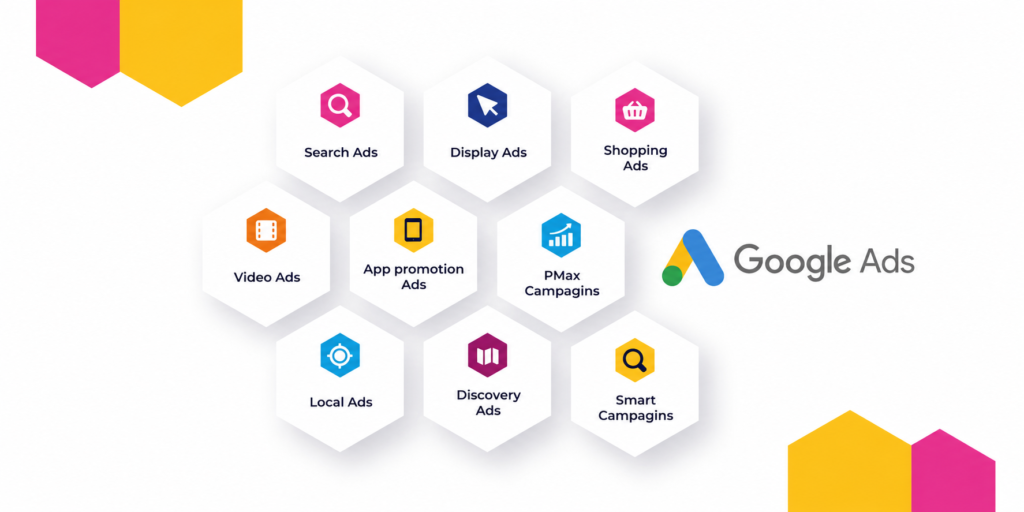
Google Ads is not a single format but a collection of campaign types, each suited to different goals:
- Search Ads appear directly within Google’s search results and are ideal for capturing users who are actively looking for a specific product or service.
- Display Ads are visual banner-style ads that appear across millions of partner websites and apps, useful for building brand awareness.
- Shopping Ads showcase product images, prices, and store names directly in search results, making them especially effective for e-commerce businesses.
- Video Ads run on YouTube and across the Display Network, allowing businesses to tell a richer story through motion and sound.
- App Campaigns are designed specifically to promote mobile app downloads and engagement across Google’s entire network.
How the Auction System Works
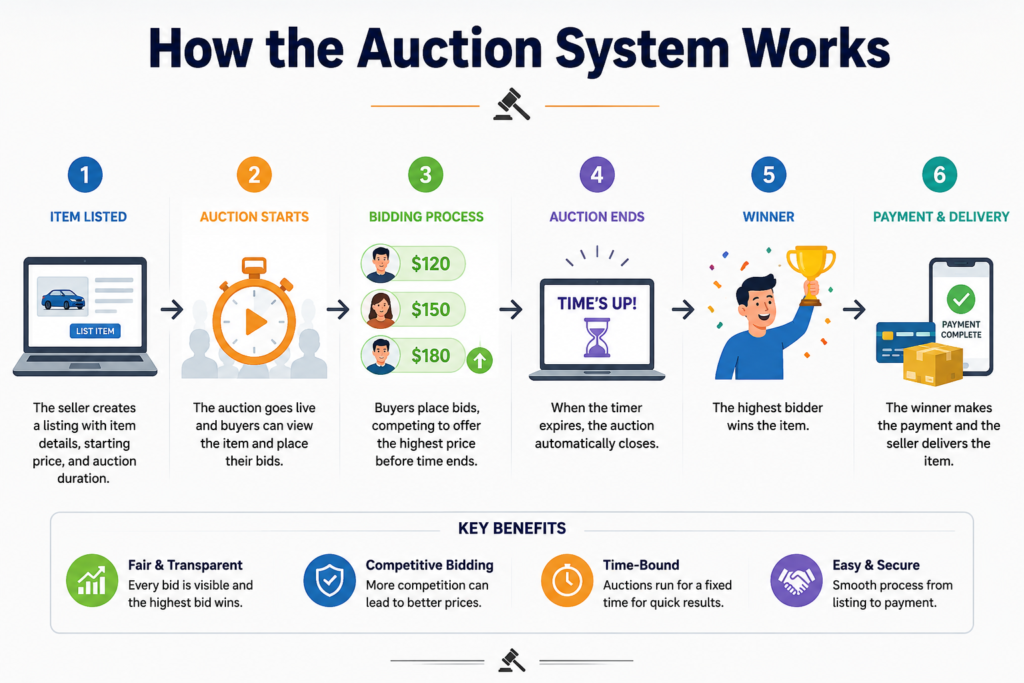
Every time a user performs a search, Google runs an instant auction behind the scenes to decide which ads appear and in what order. This process is governed by two main factors: the maximum bid an advertiser is willing to pay, and something called Quality Score. Quality Score is Google’s assessment of how relevant and useful an ad is, based on factors such as expected click-through rate, ad relevance, and the quality of the landing page a user is sent to. These two elements are multiplied together to produce what is known as Ad Rank, which ultimately determines an ad’s position. This system means that an advertiser with a lower budget but a highly relevant, well-optimized ad can still outrank a competitor who is simply spending more money.
Understanding the Costs
Cost per click varies widely depending on the industry, competition, and keyword being targeted. On average, businesses can expect to pay somewhere between one and two dollars per click, though highly competitive industries such as legal services or insurance can see costs climb to fifty dollars or more per click. In the United States, the average cost per click across all industries tends to hover around two dollars and thirty cents. Because advertisers set their own daily or campaign budgets, Google Ads remains accessible to small businesses while still offering enough scale for large enterprises to compete effectively.

Getting Started and Managing Campaigns
For businesses that want full control, Google provides direct tools to set campaign goals such as lead generation, sales, brand awareness, or app promotion, along with AI-powered bidding strategies like Performance Max that automatically optimize spend across multiple channels. For those who prefer a more hands-off approach, many hosting and marketing companies offer managed Google Ads services, running and optimizing campaigns on a client’s behalf. On the more technical side, developers can go even further by using the Google Ads API and scripting tools to build custom automation, integrate campaign data with a CRM, or manage large-scale accounts programmatically.
Final Thoughts
Google Ads remains one of the most effective ways for businesses to reach the right audience at the right time, thanks to its combination of instant visibility, precise targeting, and measurable results. Success on the platform ultimately comes down to understanding how the auction system rewards relevance as much as budget, and consistently refining campaigns based on real performance data. Whether managed independently, through automation, or with outside help, a well-structured Google Ads strategy can deliver meaningful growth for businesses of virtually any size.